
Long after Jason sailed away with the Golden Fleece, the gods grew restless. They had gifted that divine wool to test mortal ambition, but now it lay forgotten, its power diluted by time and tale. So they spun a new thread into the world — not a single fleece, but a living flock.
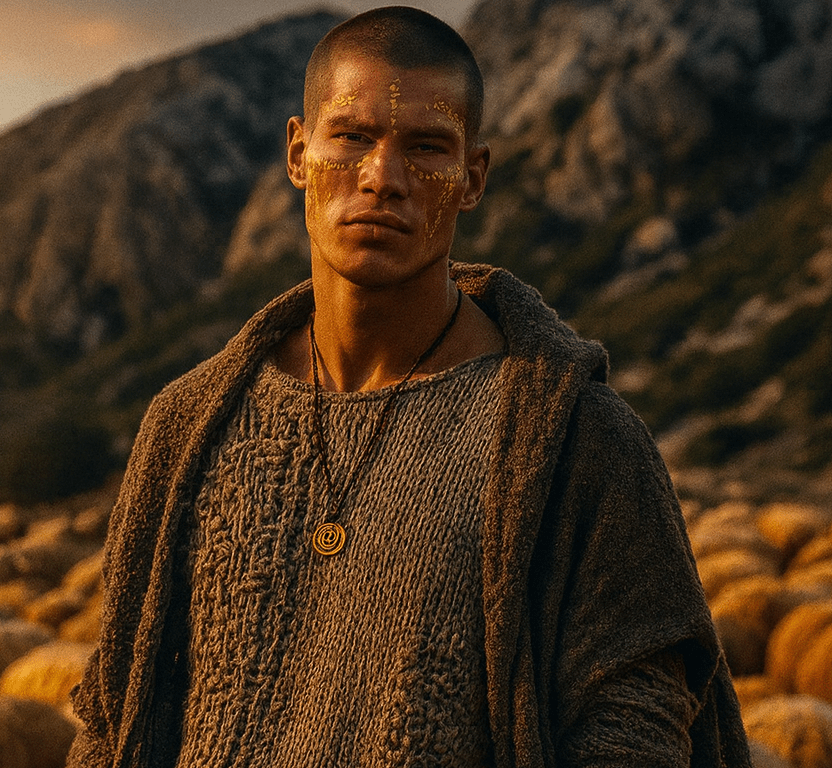
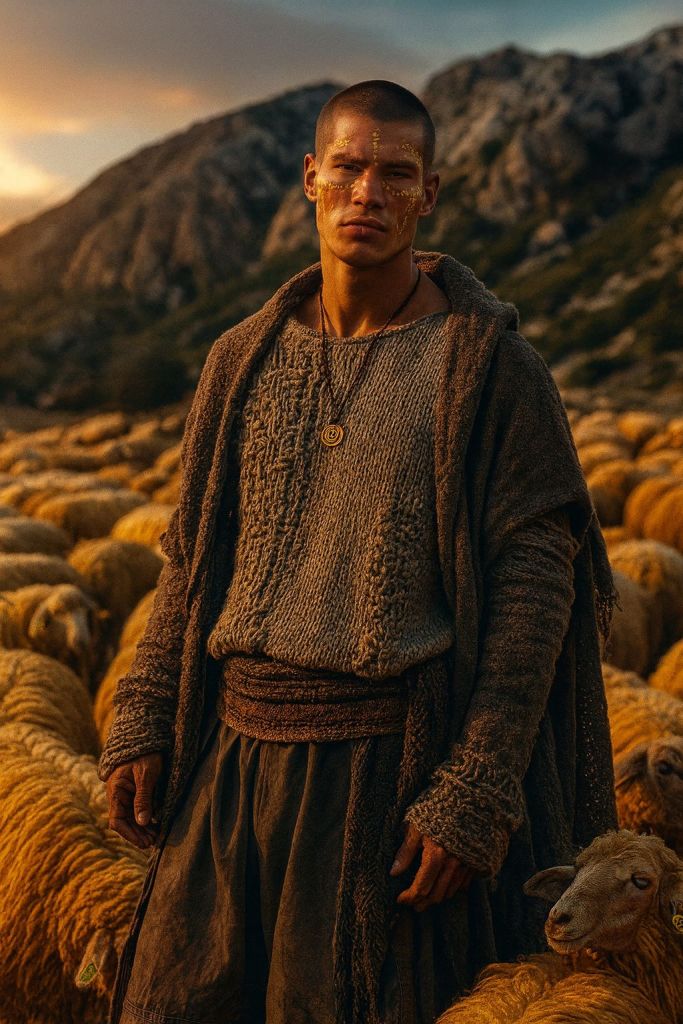
On the sun-scorched slopes of the southern Greek islands, where thyme and rock meet the sea wind, a nomadic shepherd named Theros wandered. He was born under a rare eclipse, marked by golden tattoos that shimmered when the sun touched his skin. The villagers whispered that he was chosen — not by fate, but by the old gods who still lingered in the stones and storms.
Theros did not herd ordinary sheep. His flock, the Runo, bore wool that gleamed like molten gold. They were elusive creatures, said to emerge only when the moon was full and the mountain sang. Their fleece could heal wounds, reveal truths, and bend time — but only if freely given. To shear them by force was to invite ruin.
Each morning, Theros led them through the high passes, his cloak trailing like a shadow of myth. The sheep followed not out of fear, but reverence. They knew his heart was steady, his silence sacred. Travelers who glimpsed the flock often mistook them for a mirage, a trick of the sun. But those who dared approach with greed found themselves lost in the folds of the mountain, wandering in circles until they forgot their own names.
One autumn, a merchant from the mainland arrived, offering riches for a single lock of Runo wool. Theros refused. “Gold is not the treasure,” he said. “It is the bond between shepherd and flock, the silence between hoofbeats, the light that lingers after dusk.”
And so the legend grew. Not of conquest, but of guardianship. Of a shepherd who wore no crown, yet ruled a kingdom of golden fleece and ancient trust.

 @pencilmagmen
You must be logged in to post a comment.