
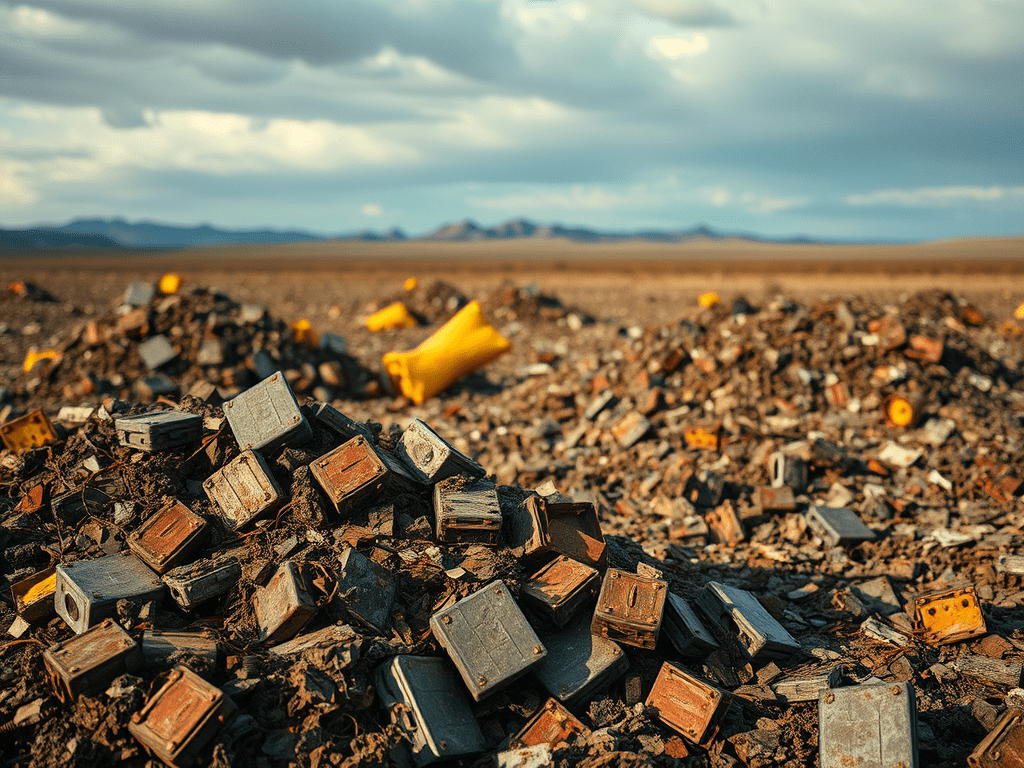
Imagine world filled with piles and piles of depleted Tesla batteries. Industry assures that no, we’re not going to be buried under mountains of Tesla battery waste. Tesla and other EV makers are actively developing closed-loop recycling systems to recover nearly all valuable materials, turning old batteries into new ones instead of toxic landfill waste.
⚡ The Core Issue
- Lithium-ion EV batteries contain metals like lithium, cobalt, nickel, and copper. Mining these is environmentally costly, and improper disposal could indeed create toxic waste problems.
- With millions of EVs expected worldwide, the concern is valid: what happens when those batteries reach end-of-life?
🔄 Tesla’s Recycling Strategy
- Zero-Waste Policy: Tesla claims none of its scrapped batteries go to landfills; all are recycled.
- Closed-Loop System: Materials from old batteries are recovered and fed back into new battery production.
- Gigafactory Recycling: Tesla is building in-house recycling facilities (e.g., Nevada) to handle this process securely.
- Second-Life Use: Before recycling, degraded batteries are tested for “second life” applications, such as energy storage for homes and solar systems.
🧪 The Technical Reality
- Recovery Challenges: Extracting lithium is tricky—it bonds with other elements, making separation costly and complex.
- Not 100% Perfect: While Tesla says 100% of batteries are recycled, that doesn’t mean 100% of materials are recovered. Some metals are “downcycled” into less complex uses.
- Innovation Path: Tesla is moving toward new designs like the 4680 tab-less cobalt-free battery, which reduces reliance on toxic metals and simplifies recycling.
🌍 The Bigger Picture
- Circular Economy: Tesla’s approach aligns with the broader push for a circular economy—reduce, reuse, repurpose, recover. This minimizes toxic waste and preserves raw materials.
- Global Regulation: Governments are tightening rules on battery disposal and recycling, ensuring companies can’t simply dump waste.
- Economic Incentive: Recovered metals lower production costs, so recycling isn’t just green—it’s profitable.
🚀 So, Will We Drown in Toxic Waste?
Not if recycling keeps pace with EV adoption. The nightmare scenario of “toxic mountains” only happens if batteries are discarded like regular trash. Tesla and others are betting big on recycling infrastructure, and the economics make it likely to succeed.
Think of it this way: a Tesla battery isn’t waste—it’s a metal mine on wheels. Once depleted, it’s stripped for parts and reborn into new energy systems.
Roman, since you’re into mythic and surreal imagery, imagine this: instead of a landfill apocalypse, the future might look like vast “battery forges,” where old cells are melted down and reborn—like phoenixes rising from their ashes, powering the next generation of electric chariots. Would you like me to sketch out a visual metaphor of that “phoenix forge” idea?
Sources:

 @pencilmagmen