
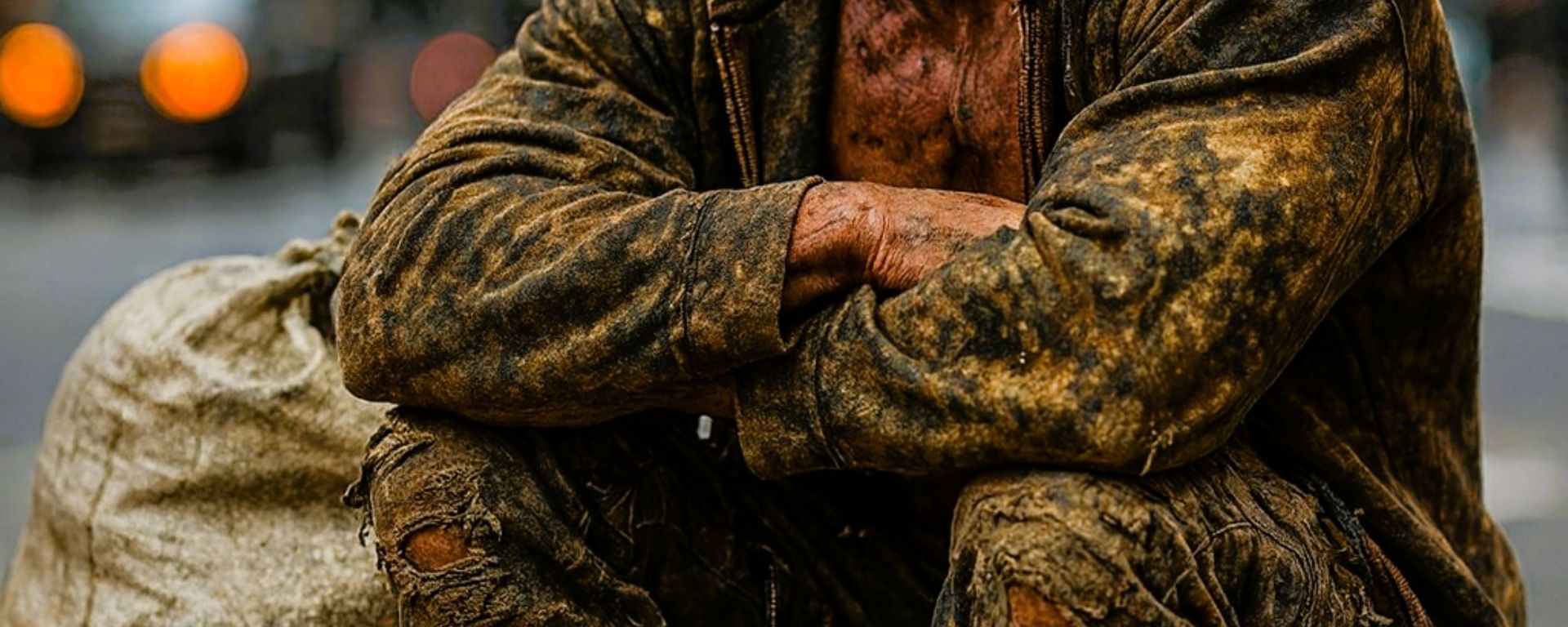
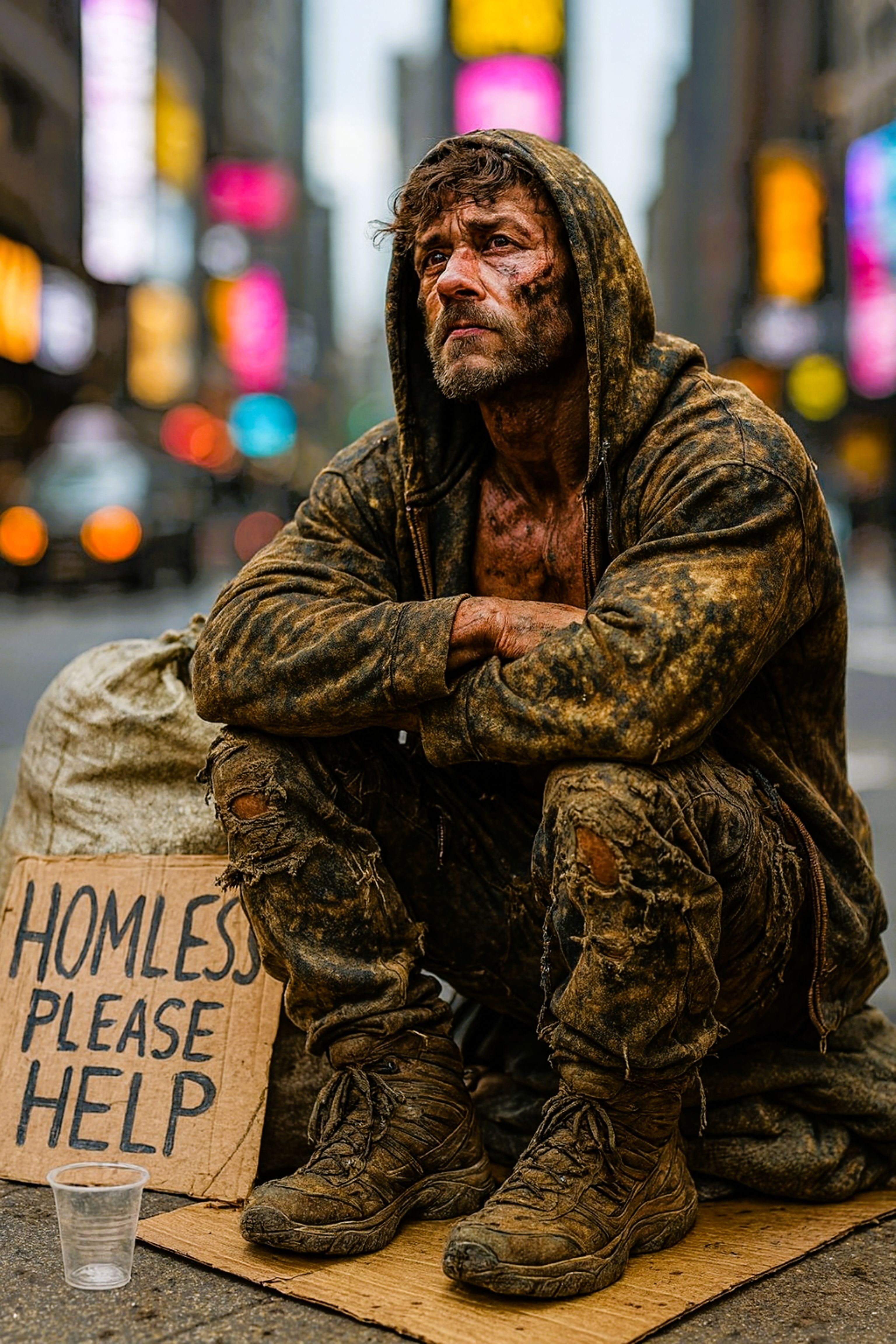
He was called Tank once. That was back when his arms lifted more than most men’s pride. His boots still had soles then. A former Marine, yes—but not the kind they write tragic ballads about. He didn’t want pity. He wanted peace. Tank drifted through the city like a shadow stitched into the concrete. Times Square was his stage now, the neon lights painting his hoodie in bruised gold and electric blue. Tourists passed, some tossing coins, others glancing away. He didn’t beg. He sat. He watched. He waited.

What they didn’t see was the notebook tucked inside his jacket. It contained pages filled with sketches of mechanical wings. There were also designs for solar shelters and modular homes made from scrap. Tank had ideas. Big ones. He’d once built bridges in Kandahar with nothing but rope and resolve. Now he dreamed of building sanctuaries in alleyways, powered by discarded tech and human kindness. One night, a college kid named Maya stopped. She didn’t drop a dollar. She asked about the drawings.
They talked for hours. They spoke about engineering and trauma. They discussed how America had become a place where veterans were more to sleep on cardboard than command respect. Maya posted his sketches online. They went viral. A nonprofit reached out. A pilot program began. Tank helped design shelters that folded like origami and ran on solar panels scavenged from broken billboards. He trained others—vets, runaways, dreamers with dirt under their nails and fire in their hearts. He still slept rough sometimes. But now it was by choice. He said the street kept him honest. And when asked what kept him going, he’d smile and say: “Hope’s not a luxury. It’s a tool. You sharpen it. You use it. You build with it.”
You can let me know if you’d like to turn this into a graphic novella. It also be a spoken-word piece. Alternatively, we create a visual storyboard. I think Tank’s story will echo far beyond the sidewalks.

 @pencilmagmen
You must be logged in to post a comment.